Healthy plants are the heart of every beautiful garden, whether you’re growing vegetables on a balcony or maintaining a lush backyard oasis. But even the most well-cared-for plants can fall victim to diseases caused by fungi, bacteria, viruses, or poor growing conditions. The good news? Most plant diseases can be prevented-or treated-using natural, eco-friendly methods that protect both your garden and the environment.
In this guide, we’ll explore common plant diseases, how to identify them early, and natural ways to treat and prevent them, while highlighting modern plant-care practices that are constantly evolving. If you want healthier plants without relying on harsh chemicals, you’re in the right place.
Understanding Plant Diseases
Plant diseases occur when harmful microorganisms interfere with normal plant functions. These pathogens thrive in certain conditions-excess moisture, poor airflow, contaminated soil, or weak plant immunity.
The three most common types of plant diseases are:
- Fungal diseases (most widespread)
- Bacterial diseases
- Viral diseases
Each behaves differently, which is why correct identification is key before choosing a treatment method.
Why Early Detection Matters
Catching plant diseases early can mean the difference between a quick recovery and losing your entire plant-or even your whole garden.
Early signs include:
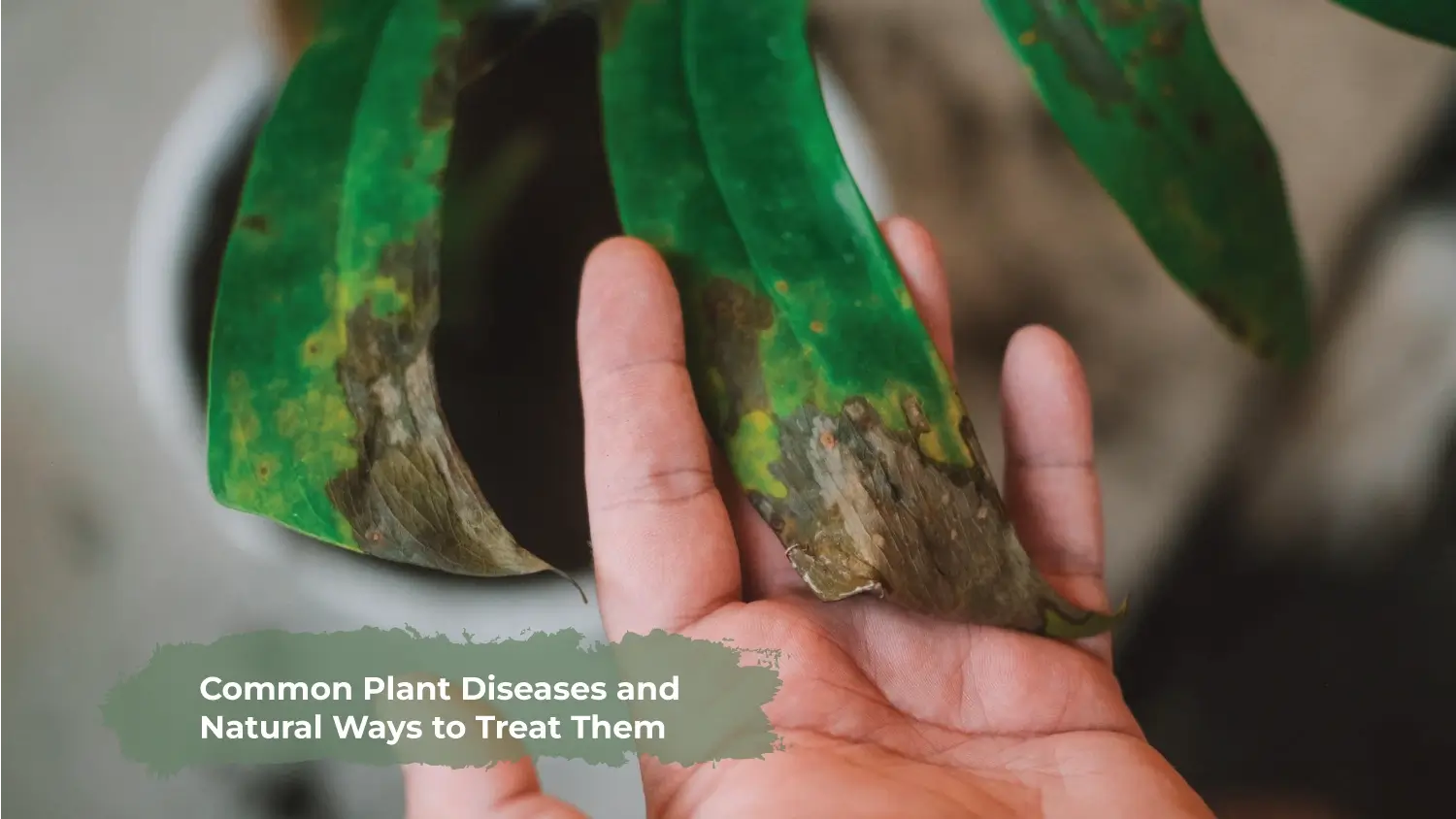
- Yellowing or spotted leaves
- White, gray, or black powdery coatings
- Wilting despite adequate watering
- Stunted growth
- Deformed fruits or leaves
Regularly inspecting plants, especially the underside of leaves and stems, is one of the simplest yet most effective plant-care habits.
Most Common Plant Diseases in Home Gardens
Fungal Diseases
Fungal infections spread quickly, especially in warm and humid conditions.
Powdery Mildew
- Symptoms: White or gray powder on leaves and stems
- Affected Plants: Roses, cucumbers, squash, indoor plants
Leaf Spot
- Symptoms: Brown, black, or yellow spots on leaves
- Affected Plants: Tomatoes, peppers, houseplants
Root Rot
- Symptoms: Mushy roots, foul smell, wilting
- Cause: Overwatering and poor drainage
Bacterial Diseases
Bacterial diseases are harder to treat and often spread through water, tools, or insects.
Bacterial Wilt
- Symptoms: Sudden wilting, even with moist soil
- Affected Plants: Tomatoes, cucumbers
Fire Blight
- Symptoms: Blackened leaves and branches that look burned
- Affected Plants: Apple, pear trees
Viral Diseases
Viruses usually spread through pests like aphids and cannot be cured-only managed.
Mosaic Virus
- Symptoms: Patchy yellow-green leaf patterns
- Affected Plants: Tomatoes, peppers, tobacco
Natural Ways to Treat Plant Diseases
Natural treatments focus on controlling disease spread while strengthening plant immunity.
Neem Oil – Nature’s Multi-Purpose Remedy
Neem oil works as a fungicide, insecticide, and antibacterial agent.
How to use:
Mix 2–3 ml neem oil with 1 liter of water and spray on affected areas every 7–10 days.
Baking Soda Spray
Effective against fungal diseases like powdery mildew.
DIY Recipe:
- 1 teaspoon baking soda
- 1 liter water
- A few drops of liquid soap
Spray early in the morning to avoid leaf burn.
Compost Tea
Compost tea introduces beneficial microbes that fight harmful pathogens.
Benefits:
- Boosts soil health
- Improves plant immunity
- Reduces fungal infections
This method is gaining popularity among eco-gardeners and is frequently highlighted by sustainable gardening platforms like Garden Idea Pro.
Garlic & Chili Spray
Garlic has natural antifungal and antibacterial properties.
How it helps:
- Repels pests
- Slows disease spread
- Strengthens plant defense
Disease-Specific Natural Treatments
| Disease | Natural Treatment |
|---|
| Powdery Mildew | Neem oil, baking soda spray |
| Leaf Spot | Compost tea, neem oil |
| Root Rot | Improve drainage, cinnamon powder |
| Bacterial Wilt | Remove infected plants, crop rotation |
| Mosaic Virus | Control pests, remove infected plants |
Preventive Plant Care Practices
Prevention is always better than cure-especially in organic gardening.
Improve Air Circulation
- Avoid overcrowding plants
- Prune regularly
Water Wisely
- Water soil, not leaves
- Water early morning
Healthy Soil = Healthy Plants
- Use compost and organic matter
- Avoid chemical overload
Clean Gardening Tools
Sterilize tools to prevent disease transfer between plants.
Ever-Evolving Trends in Natural Plant Care
Plant care is constantly evolving as gardeners embrace eco-friendly solutions.
Modern trends include:
- Microbial soil boosters
- Bio-fungicides
- Companion planting for disease resistance
- AI-based plant disease detection apps
These innovations make natural gardening more effective and accessible than ever before.
When to Remove Infected Plants
Sometimes, despite your best efforts, a plant may be beyond saving.
Remove a plant if:
- Disease spreads rapidly
- Virus infection is confirmed
- Roots are completely rotted
Dispose of infected plants properly-never compost diseased material.
Sustainable Gardening for Long-Term Plant Health
Natural disease management is not just about treatment-it’s about building a resilient ecosystem.
Key principles:
- Biodiversity
- Organic soil enrichment
- Minimal chemical use
- Seasonal planting
By following these practices, your garden becomes naturally resistant to diseases over time.
Summary
Plant diseases are a natural part of gardening-but they don’t have to ruin your efforts. By understanding common plant diseases and using natural, evolving plant-care solutions, you can protect your garden while maintaining a healthy ecosystem. Gardening is a journey of learning, observation, and balance. With patience and the right natural methods, your plants can thrive season after season-beautiful, productive, and disease-free. For more expert gardening insights, eco-friendly tips, and plant-care guides, keep exploring Garden Idea Pro, where modern gardening meets sustainable living
FAQs
Can plant diseases be cured naturally?
Many fungal and mild bacterial diseases can be managed naturally, especially when detected early. Viral diseases, however, cannot be cured.
Is neem oil safe for all plants?
Neem oil is generally safe, but always test on a small area first, especially for delicate indoor plants.
How often should I spray natural treatments?
Most natural sprays should be applied every 7–10 days or after heavy rain.
Can overwatering cause plant diseases?
Yes, overwatering is one of the biggest causes of root rot and fungal infections.
Are chemical pesticides better than natural methods?
Chemical treatments may act faster, but natural methods are safer, sustainable, and improve long-term plant health.