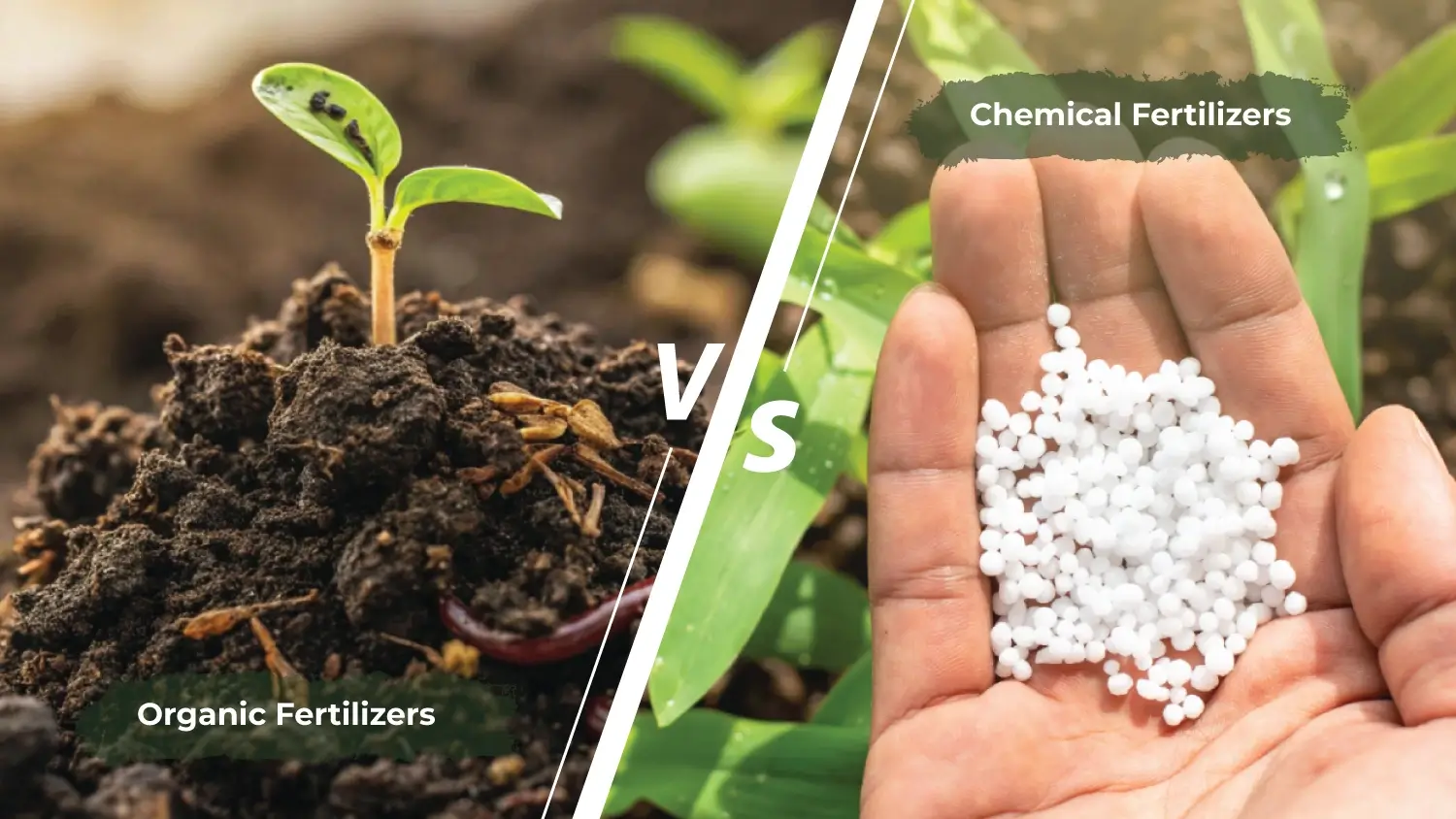
In today’s rapidly evolving agricultural landscape, one of the most debated topics is organic fertilizers vs chemical fertilizers. Farmers, home gardeners, and sustainability advocates are constantly exploring which option delivers better results for plant growth, soil health, and long-term productivity.
As the movement toward sustainable and eco-friendly farming practices grows, especially in the ever-evolving world of Organic Farming, understanding the difference between these fertilizers becomes essential. In this comprehensive guide by Garden Idea Pro, we will explore their benefits, drawbacks, environmental impact, cost-effectiveness, and long-term implications.
Fertilizers
Fertilizers are substances added to soil or plants to supply essential nutrients required for healthy growth. The primary nutrients include:
- Nitrogen (N) – Promotes leafy growth
- Phosphorus (P) – Supports root and flower development
- Potassium (K) – Enhances overall plant strength
The major distinction lies in the source of these nutrients-whether they come from natural materials or are synthetically manufactured.
What Are Organic Fertilizers?
Organic fertilizers are derived from natural sources such as:
- Compost
- Animal manure
- Bone meal
- Fish emulsion
- Green manure
- Vermicompost
They release nutrients slowly as organic matter decomposes through microbial activity in the soil.
Key Characteristics:
- Natural origin
- Improve soil structure
- Encourage microbial life
- Slow nutrient release
Organic fertilizers are a cornerstone of sustainable agriculture and the ever-growing organic farming industry.
What Are Chemical Fertilizers?
Chemical fertilizers, also known as synthetic or inorganic fertilizers, are manufactured through chemical processes. They are formulated to contain specific nutrient ratios like:
- Urea (Nitrogen)
- DAP (Diammonium Phosphate)
- NPK blends
Key Characteristics:
- Fast nutrient availability
- Precisely measured nutrient content
- Easy to apply
- Immediate plant response
They are widely used in commercial farming due to their efficiency and predictable results.
Key Differences Between Organic and Chemical Fertilizers
| Feature | Organic Fertilizers | Chemical Fertilizers |
|---|---|---|
| Source | Natural materials | Synthetic compounds |
| Nutrient Release | Slow and steady | Fast and immediate |
| Soil Health | Improves over time | May degrade with overuse |
| Environmental Impact | Eco-friendly | Risk of pollution |
| Cost | Can be cheaper if homemade | Commercially purchased |
Benefits of Organic Fertilizers
1. Improves Soil Structure
Organic fertilizers enhance soil texture, making it more porous and better at retaining water.
2. Encourages Beneficial Microorganisms
Healthy soil microbes break down organic matter, creating a balanced ecosystem underground.
3. Environmentally Friendly
They reduce the risk of water pollution and chemical runoff.
4. Long-Term Sustainability
Organic matter increases soil fertility year after year.
5. Safe for Home Gardens
For families growing vegetables or fruits, organic fertilizers reduce exposure to synthetic chemicals.
Benefits of Chemical Fertilizers
1. Quick Results
Plants show rapid growth after application, which is beneficial during critical growth stages.
2. Precision Feeding
Farmers can apply exact nutrient quantities tailored to crop requirements.
3. High Productivity
Chemical fertilizers significantly increase crop yields, especially in large-scale farming.
4. Easy Storage and Transportation
They are compact and convenient compared to bulky organic compost.
Environmental Impact Comparison
Organic Fertilizers:
- Minimal risk of groundwater contamination
- Improve carbon sequestration
- Reduce soil erosion
Chemical Fertilizers:
- Risk of nutrient runoff into rivers
- Contribute to water pollution
- Excessive use can cause soil acidity
Long-term dependency on chemical fertilizers can disturb soil biodiversity.
Soil Health and Long-Term Sustainability
Healthy soil is not just about nutrients-it is a living ecosystem. Organic fertilizers:
- Enhance microbial activity
- Increase humus content
- Improve water retention
Chemical fertilizers, while efficient, do not add organic matter to soil. Over time, this may reduce soil fertility unless combined with organic amendments.
For sustainable farming, integrating both approaches strategically is becoming a popular solution.
Cost and Availability
Organic Fertilizers:
- Can be cost-effective if made at home
- May require larger quantities
- Labor-intensive
Chemical Fertilizers:
- Widely available
- Higher upfront cost
- Lower labor requirement
In developing regions, chemical fertilizers are often subsidized, influencing farmer choices.
Which Is Better for Home Gardens?
For home gardeners, organic fertilizers are often the better choice because:
- They are safer for children and pets
- Improve soil naturally
- Enhance taste and nutritional value of vegetables
Small gardens benefit more from soil improvement than rapid yield increase.
Which Is Better for Commercial Farming?
Large-scale commercial farming often relies on chemical fertilizers because:
- Immediate nutrient supply ensures consistent yield
- Large acreage demands faster application
- Market competition requires high productivity
However, many commercial farms are shifting toward integrated nutrient management systems.
Role of Organic Farming in Modern Agriculture
The global demand for chemical-free produce is increasing rapidly. Organic farming focuses on:
- Natural inputs
- Soil health regeneration
- Biodiversity protection
- Sustainable production systems
As awareness grows about environmental conservation, organic farming continues to expand worldwide. Consumers now prioritize health, sustainability, and eco-conscious practices.
Platforms like Garden Idea Pro regularly highlight innovative and sustainable farming solutions, encouraging farmers and gardeners to adopt eco-friendly techniques.
Final Verdict: Which Should You Choose?
There is no one-size-fits-all answer.
Choose Organic Fertilizers If:
- You prioritize soil health
- You grow food for home consumption
- You aim for sustainable practices
- You support organic farming
Choose Chemical Fertilizers If:
- You need rapid growth
- You manage large-scale crops
- You require precise nutrient control
- You aim for maximum short-term yield
Best Solution: Integrated Approach
Many experts recommend combining both methods:
- Use organic fertilizers to improve soil structure
- Apply chemical fertilizers in controlled amounts when necessary
This balanced strategy ensures productivity while maintaining soil sustainability.
Conclusion
The debate between organic fertilizers and chemical fertilizers depends largely on farming goals, scale, and environmental priorities. While chemical fertilizers deliver rapid and measurable growth, organic fertilizers support long-term soil health and sustainability.
With the continuous advancement of organic farming practices, the future of agriculture lies in balance, innovation, and environmental responsibility.
For more insightful guides on sustainable gardening and farming, stay connected with Garden Idea Pro, your trusted source for practical and eco-friendly growing solutions.
FAQs
Are organic fertilizers completely safe?
Yes, when properly composted and applied correctly, organic fertilizers are safe and environmentally friendly.
Do chemical fertilizers harm the soil?
Excessive use can reduce soil fertility over time and affect microbial life, but controlled use minimizes risks.
Which fertilizer increases yield faster?
Chemical fertilizers provide quicker results due to their fast nutrient availability.
Can I mix organic and chemical fertilizers?
Yes, many farmers use integrated nutrient management systems combining both for optimal results.
Is organic farming more expensive?
Initially, organic farming may require more labor, but long-term soil health benefits often reduce overall costs.